Older home guide · British Columbia
Painting an Older BC Home: Asbestos Drywall, Lead Paint and the Rules
A large share of Kelowna's houses went up before 1990, from post-war bungalows near downtown and Pandosy to the split-levels of Rutland, Glenmore and the Lower Mission. Many of them have drywall joint compound, textured ceilings or old paint layers that may contain asbestos or lead. At Pacific Painting Kelowna, we repaint homes of every era, and this guide explains what BC's rules mean for your project before anyone picks up a sander.
WorkSafeBC identifies asbestos as the leading cause of work-related deaths in the province, and it sets clear expectations before renovation work disturbs materials in older buildings. The official guidance lives on WorkSafeBC's asbestos pages and in the province's asbestos in renovations fact sheet. What follows is our plain-language summary as working painters, not legal advice.
To be clear about our role: we are licensed and insured painters with WorkSafeBC coverage and more than 15 years of experience, not an abatement contractor. When a job could disturb a suspect material, we stop, arrange testing through a qualified professional, and carry on only once results show the work is safe or a licensed abatement contractor has dealt with the material. Homeowners, landlords and property managers get the same answer from us every time.
The Pre-1990 Hazmat Survey Rule
In plain terms: before work that could disturb building materials in an older building, someone qualified has to find out what those materials contain.
WorkSafeBC's Occupational Health and Safety Regulation requires an inspection for hazardous materials before renovation or demolition work begins. Asbestos products were so widely used before 1990 that buildings from that era need a hazardous materials survey before a crew disturbs drywall, plaster, ceiling texture, stucco or similar materials.
The survey is done by a qualified person, usually from an environmental or hazardous materials consulting firm. They take small samples from the work area, send them to an accredited lab, and write a report that says which materials contain asbestos, lead or other hazards, and where.
The rule exists to protect workers, so it applies whenever a contractor's crew does the disturbing. Homeowners doing their own work face exactly the same health risk, and some Okanagan municipalities ask for survey results when a renovation needs a permit.
Which Painting Jobs Disturb Materials?
What matters is not the age of the house alone but whether the work will sand, cut, scrape or break something. Painting over sound, intact surfaces usually disturbs nothing.
| Painting task | Disturbs material? | What happens in a pre-1990 home |
|---|---|---|
| Washing and repainting intact walls | Usually no | Painted as normal, with no sanding into old layers |
| Filling nail holes and small dents | Rarely | New filler only, no sanding into original compound until tested |
| Cutting out and replacing damaged drywall | Yes | Joint compound and board tested first |
| Sanding or skim coating old patches | Yes | Tested before any sanding |
| Wallpaper removal | Often | Compound under the paper tested, since scraping can gouge it |
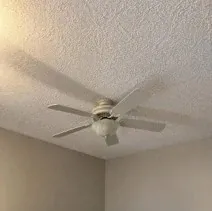
| Textured or popcorn ceilings | Yes, if scraped, patched or removed | Tested before any work beyond painting a sound surface |
| Cutting or patching stucco | Yes | Stucco sampled before cutting or chipping |
| Scraping and sanding old exterior paint | Yes, for lead | Paint layers tested, then lead-safe prep |
When people search for asbestos drywall in BC, the concern is usually the joint compound, or drywall mud, rather than the gypsum board itself. Older compounds and spray-on textures are where asbestos most often turns up, and the board less commonly. No one can tell by looking, which is why a lab sample matters more than a guess based on the house's age.
If you are planning larger repairs alongside the repaint, our drywall repair and painting and wallpaper removal pages explain how those jobs run once testing is complete.
Lead Paint in Older Homes
Lead was a common ingredient in house paint for decades. Homes built before about 1990 can have it in their lower layers, and the odds are highest in homes from before 1960. It stays harmless under newer coats as long as the paint is intact.
The hazard is dust and chips. Sanding, dry scraping, heat guns and aggressive power washing can release lead dust that settles on floors and windowsills, where young children and pets pick it up.
- Test before heavy prep. A lab test on paint chips is the reliable option, while home swab kits can miss lead buried in deeper layers.
- Contain the work area. Plastic sheeting on floors and over doorways keeps dust in one room.
- Use wet methods. Misting surfaces before scraping and wet-sanding by hand keep dust out of the air.
- Skip high-heat tools. Heat guns at high settings and open flames can turn lead paint into fumes.
- Clean up with a HEPA vacuum. Then wipe surfaces with damp cloths, since an ordinary shop vacuum blows fine dust back into the room.
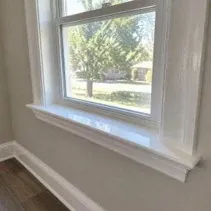
Windows, doors, trim and exterior siding are where old lead layers most often show up, because they were coated with durable oil-based enamels. Households with young children or anyone pregnant should take testing seriously before prep starts on those surfaces.
What It Means for Your Timeline and Budget
For most older homes, testing adds days, not weeks. Here is how it fits into a typical repaint.
We ask the year built
At the walkthrough we ask when the house was built and exactly what work you want. If nothing in the scope disturbs suspect materials, the job is quoted and scheduled as usual.
A consultant samples the work area
If the scope does touch suspect materials, a qualified consultant samples only the areas involved. For a few rooms this is normally one short site visit.
The lab reports back
Accredited labs commonly return results within a few business days, and many offer rush service for an extra fee. We hold the start date or reorder the rooms so testing does not stall the whole project.
The scope adjusts to the results
Negative results mean normal prep goes ahead. Positive results mean a licensed abatement contractor deals with the material first, or the plan changes to avoid disturbing it, such as leaving a sound textured ceiling alone.
Painting resumes
Once abatement is finished and the area has been cleared, we patch, prime and paint. The finished walls look like any other repaint.
Testing and abatement are billed by those specialists, separate from our painting quote. Their cost depends on how many samples are needed and what turns up, so ask the consultant for a price before sampling. For our own painting prices, see painting costs in Kelowna.
Asbestos and Lead Paint Questions
Does all drywall in pre-1990 BC homes contain asbestos?
No. Many older homes test clean, but asbestos was common enough in joint compound and textures that only a lab test can tell you. The age of the house is a reason to test, not proof of a problem.
Do you remove asbestos or popcorn ceilings?
No. We are painters, not an abatement contractor. If testing finds asbestos, a WorkSafeBC-licensed abatement contractor handles removal, and we paint once the area is cleared.
Can you paint over asbestos drywall?
Painting over intact, undamaged drywall generally does not disturb it. The risk comes from sanding, cutting, drilling or scraping, which is why prep on suspect materials waits for test results.
Are home lead test kits good enough?
They are a useful first check on the top layers, but they can miss lead lower down. Before sanding or scraping old trim, windows or siding, a lab test on paint chips gives a reliable answer.
Keep exploring
Services this guide relates to
Drywall Repair
Once testing is done, this is how we repair, skim and repaint damaged drywall.
Read moreWallpaper Removal
Stripping old wallpaper can gouge the compound underneath. Here is how we handle it in older homes.
Read moreCeiling Painting
Repainting sound textured and flat ceilings, and when a ceiling needs testing first.
Read moreInterior Painting
Our full interior repaint service for homes of any age.
Read moreContact
Call 778-946-5725, email us or request a free painting estimate online, 7 days a week.
Read more
Older home? Start with a walkthrough
Talk to Us Before You Renovate
Tell us the age of your home and the work you have in mind, and we will tell you honestly what needs testing first. Explore our residential painting services and drywall repair and painting, then book a free walkthrough any day of the week.
- 15+ years experience
- Licensed & insured
- WCB coverage
- 1-year labour warranty
Mon to Fri 7 a.m. to 8 p.m. · Sat 8 a.m. to 8 p.m. · Sun 8 a.m. to 6 p.m.
Loading the estimate form…
Or call 778-946-5725 or email info@pacificpaintingbc.com.