Exterior guide · Okanagan weather
The Best Time to Paint a House Exterior in the Okanagan
Most years, the reliable window for exterior painting in the Okanagan runs from about mid-May to early October. The easiest stretches are usually late spring and the first half of September, when days are warm, nights stay mild and the sun is not yet, or no longer, brutal. That pattern comes from more than 15 years of siding, stucco and trim work by the crews at Pacific Painting Kelowna, a residential and commercial painting company based near South Pandosy.
Timing here is a different problem from timing on the coast. Long rainy spells are rarely the main threat in this semi-arid valley. Instead, the risks are afternoons in the mid-30s, intense UV, smoky weeks in late summer and clear spring and fall nights that drop close to freezing.
This guide covers the temperature and dew limits printed on every can, the trade-offs of spring, summer and fall, how we work around heat and smoke, and how far ahead to book. It is written for homeowners, strata councils and property managers in Kelowna, West Kelowna and Lake Country planning a repaint of siding, stucco, trim or decks. If you only need one answer, it is this: get your quote in winter, paint between late May and mid-September, and never let a schedule push paint onto a cold or damp wall.

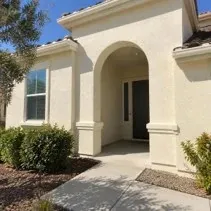
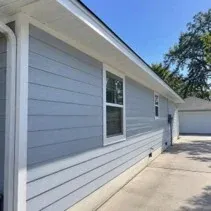
Temperature and Dew Point Limits
Every exterior product has a minimum temperature on its label, and it applies to the surface as well as the air. The paint also has to stay above that line long enough to form a film.
Air and Surface Temperature
Most standard exterior latex needs about 10°C and rising, measured on the wall itself. A north wall in May can sit several degrees colder than the air in the driveway.
We check surfaces with an infrared thermometer rather than trusting the forecast. Shaded walls often warm up hours later than the sunny side of the house.
Dew and Overnight Moisture
The surface should be at least 3°C above the dew point while you paint, and the coat needs to dry before evening dew settles. Clear Okanagan nights cool fast, so dew forms on siding even after a dry, sunny day.
Dew on latex that has not set can leave sticky streaks, a dull blotchy sheen or a weak film that fails early.
Why a Warm Afternoon Can Still Fail
A 16°C April afternoon feels like painting weather, but the overnight low may be near freezing. Latex that drops below its minimum before the film forms cannot fuse properly, and may crack or chalk early.
In the shoulder seasons we start once morning dew has burned off and stop painting by mid-afternoon. That gives every coat several warm hours before the temperature falls.
| Coating | Typical minimum on the label | Things to watch |
|---|---|---|
| Standard exterior acrylic latex | About 10°C | Must stay above the minimum through drying, not just at application |
| Low-temperature acrylic lines | About 2°C to 4°C | Longer dry times; dew and frost still ruin the film |
| Oil and alkyd primers | Varies by product | Slow to dry, so overnight dew is a bigger risk |
| Exterior wood stains | Varies by product | Wood must be dry right through, not just on the surface |
Spring, Summer or Fall?
Each part of the Okanagan painting season has a trade-off. None is wrong, but each needs a different plan.
Spring: Mid-May to June
Mild temperatures make for comfortable painting and good flow. The catch is unsettled weather, since June is often one of the wetter months in the valley, and cool nights early in the season.
Spring is ideal for homeowners who want the work done before summer holidays. Expect a few rain days to shift the schedule.
Summer: July and August
Dry and dependable, with the longest days. The challenges are afternoon heat, paint drying too fast, and smoky stretches in many recent summers.
Summer jobs run on an early schedule and follow the shade around the house, as explained below.
Fall: September to Early October
Early fall is often the sweet spot, with warm, clear days and smoke usually gone. Days shorten quickly, though, and frost can arrive in the higher neighbourhoods first.
Homes in the Upper Mission, Black Mountain, Glenrosa or up the benches above Lake Country can lose usable painting hours before the lakeshore does.
Painting in Summer Heat
On a 33°C day, the problem is not the air temperature but the wall in direct sun. Dark siding facing west can get much hotter than the air around it.
- Follow the shade. We start on the west side in the morning, once any dew is gone, and work around to the east walls after they lose the sun. South walls get done early in the day or on cooler days.
- Respect the upper limit. Many product data sheets list a maximum application temperature in the low 30s Celsius. Paint applied to a hot wall dries before it can level, leaving lap marks, brush marks and a weaker bond.
- Keep a wet edge. In dry heat we work smaller sections, break at corners and trim lines, and never stop halfway across a wall of siding.
- Plan for dark colours. Charcoal and navy absorb far more heat than light colours, which speeds up fading and puts more stress on wood. On vinyl siding, choose from a manufacturer's vinyl-safe colour range, such as Sherwin-Williams VinylSafe, so the siding does not warp.
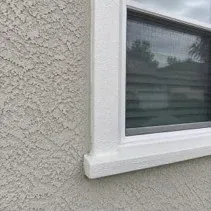
Low humidity also means stucco and masonry soak up water from fresh paint quickly. On hot days we may lightly mist very dry stucco first, if the product allows it, so the coating does not flash dry on contact.

Can You Paint Outside Near 0°C?
Short answer: not at 0 degrees, and not without a plan anywhere near it.
Several premium low-temperature exterior paints are rated for application down to roughly 2°C to 4°C. That rating has conditions attached: the surface must be dry and frost-free, and it must stay above the minimum while the paint dries.
In late October in Kelowna, a sunny afternoon might reach that range for only a few hours on the south side of a house. North walls may never get there, and overnight frost undoes the work.
Paint applied too cold often looks fine at first, then cracks, chalks or loses adhesion by the next spring. For that reason, late-season jobs are kept small, scheduled for the warmest hours, and paused rather than forced when nights turn cold.
Wildfire Smoke Days
Smoke has become a normal part of planning an Okanagan summer. It affects the paint, the prep and the people doing the work.
Ash that lands on wet paint embeds in the film and leaves a gritty, speckled finish. Fine smoke residue on siding also weakens adhesion if it is not washed off before priming.
We watch the Air Quality Health Index (AQHI) for the Central Okanagan and the smoke forecast, and we pause work when conditions are poor for crews or for fresh paint. When that happens, we talk with you and move your dates instead of painting through it.
If a smoky summer has left residue on your home, read our guide to cleaning and repainting after wildfire smoke and ash before you book.
Exterior Timing FAQs
How long after rain can you paint a house exterior?
Smooth surfaces such as fibre cement can be ready within a day of sun. Wood siding and stucco hold water longer, so we check them with a moisture meter before priming. Painting damp wood traps moisture and leads to blistering.
What time of day is best for exterior painting?
In summer, early morning to mid-afternoon, following the shade. In spring and fall, late morning to mid-afternoon, so the coat dries before evening dew.
How long does exterior paint need before it rains?
It depends on the product, temperature and humidity, so we follow the label for each one. As a working rule, we want a dry forecast for the rest of the day after the last coat, and longer for stains and oil primers.
Does a stucco or deck job follow the same timing?
Mostly, with a few differences. Stucco must be dry and patched areas fully cured, while deck stain needs dry wood and no rain for a full day. Our deck and fence staining page covers stain timing in detail.
When to Book Your Exterior
Summer start dates fill first. Homeowners who want June to August work usually get quotes in winter or early spring.
January to March: get your quote
We walk the exterior, note repairs, and give you a written, itemised quote. It is also the time to sort out strata approvals if your home is in a strata.
March to April: choose colours
Test large samples on the actual siding in daylight, on both a sunny and a shaded wall. A colour consultation helps if you are changing the look completely.
May to June: early-season starts
Good for homeowners who want it done before summer. Leave some flexibility for rain days.
July to September: peak season
The most dependable weather, with early starts in heat and occasional smoke pauses. Shorter days limit how much fits into September, so book early.
Our exterior house painting service explains how we prep, prime and paint once your date arrives.
Keep exploring
Services this guide relates to
Exterior Painting
How we prep, prime and paint Okanagan house exteriors through the season.
Read moreHow Long Exterior Paint Lasts
Realistic lifespans by surface, and the signs it is time to repaint.
Read moreWildfire Smoke and Ash
Cleaning smoke and ash residue before painting, and what to do after a smoky summer.
Read moreStucco Painting
Stucco has its own cure and moisture rules. See how we coat it.
Read moreContact
Call 778-946-5725, email us or request a free painting estimate online, 7 days a week.
Read more
Free exterior walkthrough
Lock In Your Exterior Painting Date
We book walkthroughs 7 days a week, all year round. Get a written, itemised quote now and choose your start date before the summer calendar fills.
- 15+ years experience
- Licensed & insured
- WCB coverage
- 1-year labour warranty
Mon to Fri 7 a.m. to 8 p.m. · Sat 8 a.m. to 8 p.m. · Sun 8 a.m. to 6 p.m.
Loading the estimate form…
Or call 778-946-5725 or email info@pacificpaintingbc.com.